Why AI Marketing Tools Fail Without a Real Strategy
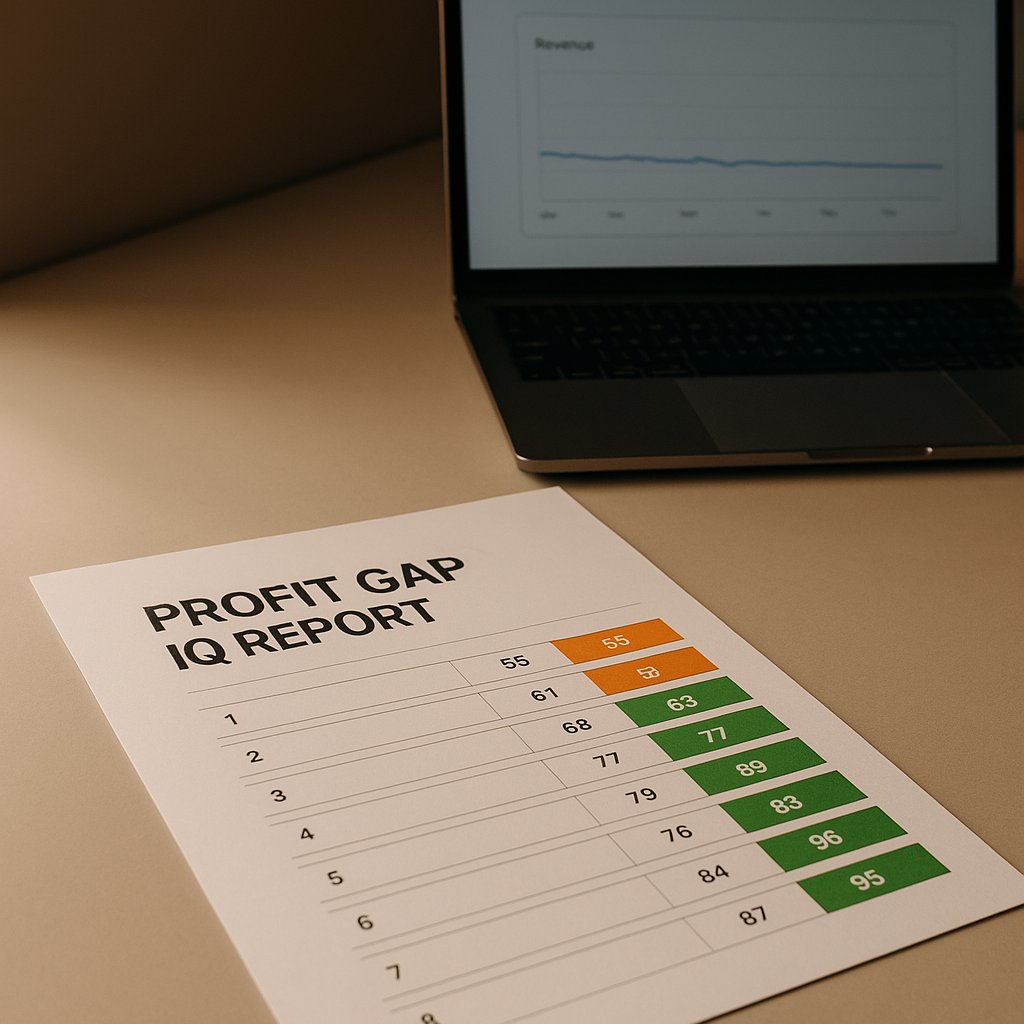
You upgraded to AI-powered ads. You subscribed to the AI content tool. You let the platform's algorithm 'optimize' your campaigns automatically. And yet, at the end of the quarter, the revenue number looked exactly the same as before.
This is not a technology failure. It is a sequencing failure. And it is costing small and mid-sized businesses thousands of dollars every month.
The uncomfortable truth about AI marketing in 2026 is this: 90% of organizations increased their AI marketing investment in the past year, but only 12% can demonstrate measurable results from it. That is not a rounding error. That is a structural problem baked into how most businesses approach AI tools. They buy execution before they understand the problem. They automate activity before they diagnose the leak.
This article breaks down exactly why that happens, what it costs, and the three-step diagnostic system FreshThink uses instead.
The Real Reason AI Marketing Tools Underdeliver
AI marketing tools are genuinely powerful. They can generate ad copy in seconds, identify audience segments, automate email sequences, and optimize bidding strategies faster than any human team. None of that is hype.
The problem is that power without direction is just expensive noise.
When a business owner buys an AI content tool without first knowing whether their credibility gap is the actual conversion problem, they are automating the wrong thing. When they run AI-optimized ads without diagnosing whether their landing page has a trust problem, the algorithm will find more people to send to a broken destination. Faster. At higher volume.
This is the core failure pattern: most small businesses skip the diagnosis step entirely and go straight to execution. Traditional agencies encourage this because execution is what they sell. The result is a cycle of activity with no accountability, and a growing pile of marketing spend with no clear explanation for why it is not working.
AI did not create this problem. But it made it scale faster.
What a Profit Gap Actually Is
Before you can fix your marketing, you need a precise name for what is broken. At FreshThink, we call these profit gaps. A profit gap is an invisible breakdown in how customers find you, trust you, or buy from you.
Note the three dimensions. They are sequential and they are all required.
Visibility is whether customers can actually find your business. In 2026, this is more complicated than it sounds. Google's AI Overviews are reshaping search results in ways most SMB owners have not accounted for. Approximately 38% of clicks that used to go to organic results are now being absorbed by AI overview surfaces. If your visibility strategy was built for the old search model, you may be losing top-of-funnel traffic without any obvious explanation.
Credibility is whether customers trust what they find. Traffic that lands on a website with weak social proof, inconsistent messaging, or thin review signals will not convert regardless of how much you spend on ads. This is the gap that most agencies never audit because it does not show up cleanly in a campaign dashboard.
Conversion is whether your marketing actually closes. You can have strong visibility and credible positioning and still lose the sale if the offer is unclear, the call to action is buried, or the follow-up sequence has a gap. This is where most 'optimization' conversations happen, but optimizing conversion without addressing visibility and credibility first is like fixing the checkout counter when the problem is that customers are not getting past the front door.
Most businesses have active profit gaps in at least four of the nine dimensions we score. Most of them have no idea which four.
Why 'More Marketing' Makes the Problem Worse
Here is the counterintuitive reality that no one in the agency world wants to say out loud: adding more marketing activity on top of undiagnosed profit gaps does not grow your business. It drains it.
Every ad impression served to the wrong audience is a wasted dollar. Every piece of AI-generated content published without a credibility strategy is noise that trains your audience to ignore you. Every campaign launched without knowing whether your conversion path is intact is a test you are paying for but not learning from.
The dominant marketing advice in 2026 is to publish more, spend more, and trust the AI to optimize. That advice works when the foundation is sound. When the foundation has gaps, more volume just means faster bleeding.
The businesses that are growing right now are not the ones adding more tools. They are the ones that diagnosed the specific leak in their customer acquisition system and fixed that first. Then they scaled.
The 3-Step System FreshThink Uses Instead
FreshThink was built around a single organizing principle: diagnose before you prescribe. Every engagement begins with the same three steps.
Step 1: Score the nine dimensions before spending a dollar on execution.
The Profit Gap IQ Report is a manually built, AI-assisted diagnostic that scores a business across nine specific factors that determine whether customers can find them, trust them, and buy from them. It is not an automated audit. It is not a template with your logo on it. It is a scored report built by the FreshThink team, delivered within 24 hours, and reviewed on a short call so nothing gets lost in interpretation.
The output is a number against each factor. Not a narrative. Not a 40-page PDF of recommendations that never get implemented. A score. You know exactly where you stand and exactly which gaps are costing you the most.
Step 2: Identify the highest-leverage gap, not the most obvious one.
Once the diagnostic is complete, the conversation shifts from 'what should we do next?' to 'what specific gap is costing us the most right now?' This is a fundamentally different question and it produces fundamentally different decisions.
A business might assume their problem is traffic. The diagnostic might reveal their credibility score is the actual bottleneck. Fixing visibility when credibility is the leak means paying for more people to arrive at a destination that will not convert them. The diagnostic prevents that mistake.
This step also separates the problems that need immediate attention from the ones that can wait. Not every gap is equally expensive. Knowing which one to fix first is the strategic leverage that most agencies never provide because most agencies are not in the diagnosis business.
Step 3: Execute into the gap, not around it.
Once the specific profit gap is identified and prioritized, FreshThink builds the execution layer to address it directly. AI-powered lead conversion systems, automated follow-up workflows, database reactivation for unconverted leads already in the CRM, conversational AI for appointment booking. The tools are real and they are powerful. But they are deployed after the diagnostic, not instead of it.
This is the sequence that makes AI marketing actually work: clarity first, execution second. Every dollar spent after a completed diagnostic is a dollar that knows exactly what it is trying to fix.
The Objection Every Skeptical Owner Has Right Now
If you have read this far and you are thinking 'I have already paid for an agency audit and it did not help,' that is a fair response. Most marketing audits are vague narrative documents that describe problems without scoring them, recommend solutions without prioritizing them, and leave the owner exactly as confused as before, just with a PDF to show for it.
The Profit Gap IQ Report is different in a specific, verifiable way: it produces a score against each of the nine factors. That score creates accountability. If the report does not show you at least three specific, actionable gaps you were not already aware of, you should not pay for it. That is the standard we hold ourselves to because the value of a diagnostic is entirely in its specificity.
The other common hesitation is timing. 'I'll wait until Q4 to look at this.' But Q3 is exactly when the diagnosis should happen. You still have a quarter to act on what you find before the budget cycle closes. Waiting until Q4 to discover a credibility gap means you will spend Q4 dollars on a problem you could have fixed in August.
What the Orange County Market Is Missing
Every named competitor in the Orange County marketing landscape leads with services. SEO packages, PPC management, web redesigns, social media management. The conversation always starts with 'what do you need done?' rather than 'why isn't what you're doing working?'
That service-first model is not wrong for every business. But for the SMB owner who has already tried three agencies and spent real money without seeing results, it is the wrong entry point. They do not need another deliverable. They need an answer.
FreshThink is the only agency in this market that leads with a scored diagnostic framework as its entry offer. That is not a positioning claim. It is a structural difference in how the engagement starts. And it changes everything about what comes after.
The Transformation That Is Actually Available
The goal is not to have better marketing. The goal is to have marketing that works predictably, that converts reliably, and that you can measure with confidence. The goal is to stop wondering whether your agency is doing something useful and start knowing which specific investment is producing which specific return.
That transformation requires a foundation. The foundation is a clear, scored picture of exactly where your customer acquisition system is broken. Everything else is built on top of that.
If you are spending money on marketing and you cannot explain why it is or is not working, that is a profit gap. And it is diagnosable.
Get your free Profit Gap IQ Report. Delivered in 24 hours. Reviewed with you on a short call. No agency pitch. Just your score. Visit FreshThink and find out exactly where your revenue is leaking before you spend another dollar on execution.

David Matthies
Co-Founder
David Matthies is Co-Founder of FreshThink and SparkIQ, an AI marketing agency that helps small and mid-sized businesses identify exactly where revenue is leaking before recommending how to fix it. His work centers on replacing guesswork with structured diagnostics — giving business owners a clear picture of what is actually driving or blocking growth. He writes about the gap between marketing effort and revenue results, and how data-driven analysis changes the decisions businesses make.
More from David Matthies →