Why Mission Viejo Businesses Disappear From AI Search
Something changed in how customers find local businesses in Mission Viejo, and most owners only notice it after the phone has already gone quiet. The reports still show impressions. The ads are still running. But the customers stopped arriving at the rate they used to, and nobody at the agency can explain why.
The Shift Happening Right Now in Local Search
For most of the last decade, showing up in local search meant one thing: ranking on Google's first page. Business owners understood that game. You built a website, ran some ads, collected reviews, and hoped your name appeared when someone typed a relevant phrase into the search bar.
That game still exists. But a second game has started running on top of it, and the rules are completely different.
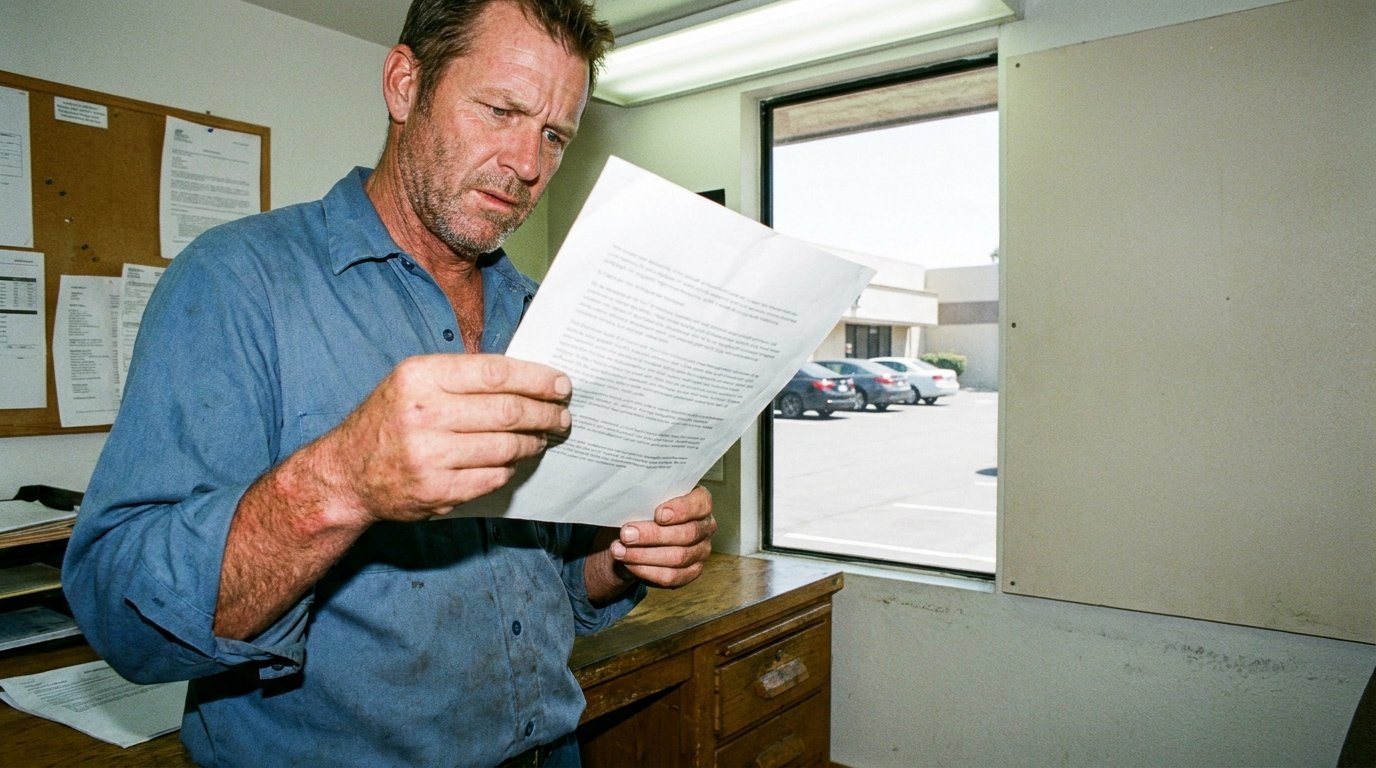
"The phone stopped ringing and the reports showed nothing wrong. That is the signature of an AI visibility problem, not a campaign problem."
When a potential client in Mission Viejo opens ChatGPT or types a question into Google and gets an AI-generated answer at the top of the page, they are not looking at a list of ranked websites. They are reading a recommendation. An AI system has already decided which businesses are worth mentioning, based on signals that have nothing to do with your ad spend or your keyword rankings. If your business is not in that recommendation, you are invisible to that buyer before they ever scroll to the organic results.
This is not a future trend. It is happening right now, across every service category in the South Orange County market. And the businesses that understand it are quietly capturing demand that used to be distributed more evenly.
What AI Engines Actually Look For
AI-generated answers and Google AI Overviews do not work like a search ranking algorithm. They pull from a different set of signals, and most of them are things a traditional SEO campaign was never designed to build.
Here is what actually drives AI citation for a local service business:
Third-party authority signals. AI engines weight external mentions heavily. This means reviews on platforms like Google, Yelp, and industry-specific directories, mentions in local news or editorial content, and references on other credible websites. An agency that has been optimizing your site for years may have done almost nothing to build the external authority footprint that AI systems treat as proof of relevance.
Structured, answer-ready content. Pages that AI systems cite tend to be recently updated and written to answer a specific question directly. If your website is built around selling your services rather than answering the questions your buyers are typing into AI tools, you are likely being passed over in favor of a competitor whose content happens to be structured the way AI engines prefer.
Entity clarity. AI engines build a picture of your business as an entity, not just a website. That picture is assembled from your name, address, phone number, category, and the consistency of those details across every platform where you appear. Inconsistencies create ambiguity. Ambiguity reduces recommendation frequency.
Recency. Research from Ahrefs found that 76.4 percent of the pages most frequently cited by ChatGPT had been updated within the last 30 days. If your content has been sitting untouched for six months, the AI systems scanning your category are more likely to cite a competitor who published something last week.
The Profit Gap Nobody Is Measuring
Here is the problem with how most Mission Viejo business owners are currently being served by their marketing agencies. The reports they receive measure activity in the traditional funnel: impressions, clicks, conversions. Those metrics still matter. But they do not measure what is happening at the top of the funnel before a buyer ever reaches your website.
The profit gap is not in your campaigns. It is in the invisible layer above them, where AI decides who gets recommended before the search even begins.
When an AI engine recommends a competitor and a buyer chooses that competitor without ever visiting your site, that loss does not appear anywhere in your analytics. You do not see a drop in clicks from a search term you were winning. You see nothing at all. The demand simply never arrives, and the absence is invisible in every report your agency is currently sending you.
This is why business owners describe the slowdown as something they feel before they can prove. Revenue is softer. New client flow is inconsistent. The agency shows you a report and says the numbers look fine. Both things are true at the same time, and neither one explains the other.
The explanation is in the AI visibility gap: the distance between where your business currently shows up in AI-generated recommendations and where your competitors are appearing instead.
How to Find Out Where You Stand
The first step is not a new campaign. It is a diagnostic.
A real AI visibility diagnostic does several specific things. It tests the actual queries your potential clients are entering into AI tools right now, including ChatGPT, Google AI Overviews, Perplexity, and Gemini, and records which businesses appear in the answers for your category and your geography. It compares your presence against the businesses that are being recommended instead of you. And it traces the gap back to specific, fixable causes: a thin content footprint, inconsistent entity signals, a review profile that does not carry enough weight for AI systems to cite you confidently.
This is exactly what the AI Visibility Check is designed to surface. It is a structured diagnostic that scores a business across the dimensions that determine AI recommendation presence: how findable you are across AI-powered search surfaces, how credible your external authority signals are, and where the specific profit gaps are costing you customer flow you cannot currently see or measure.
The output is not a list of deliverables. It is a prioritized map of exactly which gaps are doing the most damage, so you can make decisions about where to focus without guessing.
Why Traditional Agencies Miss This
The agencies most Mission Viejo business owners have hired were built for a different search environment. They are optimized for Google's traditional ranking algorithm, for paid search auctions, and for social media engagement metrics. Those skills are not worthless. But they are insufficient for the current environment.
AI-powered search does not respond to the same levers. You cannot buy your way into an AI recommendation the way you can buy a paid search position. You cannot rank your way in with keyword density. The signals that drive AI citation require a different diagnostic framework and a different set of interventions: external authority, structured content, entity consistency, recency, and third-party proof.
Most traditional agencies have not rebuilt their service model around this. Some have added AI language to their pitch decks. But if you ask your current agency to show you the specific prompts they are monitoring to track your AI citation rate, or to show you where competitors are being recommended instead of you, most will not have an answer.
That is not a criticism. It is a description of a structural gap in how local marketing services have been delivered, and it is the gap that is costing Mission Viejo business owners revenue they cannot see on any report they currently receive.
What Changes When You Fix It
When a local business closes its AI visibility gaps, the effects tend to show up in the metrics that actually matter: inbound call volume, new client inquiries, and booked appointments. Not impressions. Not reach. The metrics that translate directly to revenue.
The mechanism is straightforward. When AI engines begin recommending your business in response to the queries your potential clients are actually using, you capture demand at the moment of intent rather than competing for attention further down the funnel. The buyer who asks an AI tool for a recommendation and sees your name is a warmer prospect than the buyer who clicked a paid ad. They arrived through a recommendation, not an interruption.
The businesses that are winning this shift right now in South Orange County are not necessarily the ones with the biggest ad budgets. They are the ones that understood what changed and made targeted adjustments to the specific signals AI systems use to decide who gets recommended. In some cases, the changes are narrow: a content update on two or three pages, a review acquisition push on the right platforms, a cleanup of entity data across directories. The point is not to do more marketing. The point is to fix the specific things that are creating the invisible profit gap.
Frequently Asked Questions
What exactly is an AI Visibility Check and what does it tell me? The AI Visibility Check is a structured diagnostic that tests how your business appears across AI-powered search surfaces including Google AI Overviews, ChatGPT, and Perplexity for the queries your potential clients are actually using in your category and geography. It scores your presence against competitors who are currently being recommended instead of you and identifies the specific gaps in authority signals, content structure, and entity data that are causing you to be passed over. The output is a prioritized action map, not a generic audit.
How is this different from the SEO audit my current agency already ran? A traditional SEO audit measures how your website performs in Google's keyword ranking algorithm. An AI visibility diagnostic measures something different: whether AI engines are citing and recommending your business in response to buyer questions, before they ever reach the search results. The signals that drive AI recommendation are largely invisible to a standard SEO audit: third-party mentions, structured answer-ready content, entity consistency, and recency. Most businesses that have had recent SEO work done have never had their AI visibility measured at all.
My agency says my rankings are fine. Why would I need this? Rankings measure one specific surface: Google's traditional organic results. AI Overviews, ChatGPT responses, and other AI-generated recommendations are a separate surface with different signals. A business can rank well in traditional search and still be completely absent from AI-generated recommendations. If your phone has slowed down and your reports look fine, the gap is almost certainly at the AI layer, not the ranking layer.
How quickly can I expect to see results after fixing AI visibility gaps? The timeline depends on which gaps are found and which interventions are prioritized. Content updates and entity data corrections can affect AI citation patterns within weeks, particularly given research showing that AI engines heavily favor pages updated within the last 30 days. Authority signal building through reviews and external mentions takes longer but compounds over time. The diagnostic tells you which levers move fastest for your specific situation.
Is FreshThink replacing my current agency? FreshThink operates as a diagnostic and strategic clarity layer, not a replacement for implementation. The AI Visibility Check tells you exactly where your revenue is leaking and which gaps to fix first. What you do with that information, whether through your current agency, a new one, or direct action, is your decision. The goal is to give you a clear, scored picture of the problem before you spend another dollar on execution.
The Diagnosis Comes Before the Fix
If you are a Mission Viejo business owner who has watched the phone get quieter while the agency reports stayed green, the answer is not another campaign. It is a clear-eyed look at the layer of search that your current reporting has never measured.
The AI visibility gap is real, it is specific, and it is fixable once you know exactly where it is. But you cannot fix what you have not diagnosed, and you cannot diagnose it with the tools that were built for a different version of search.
Find out where your revenue is leaking with the AI Visibility Check